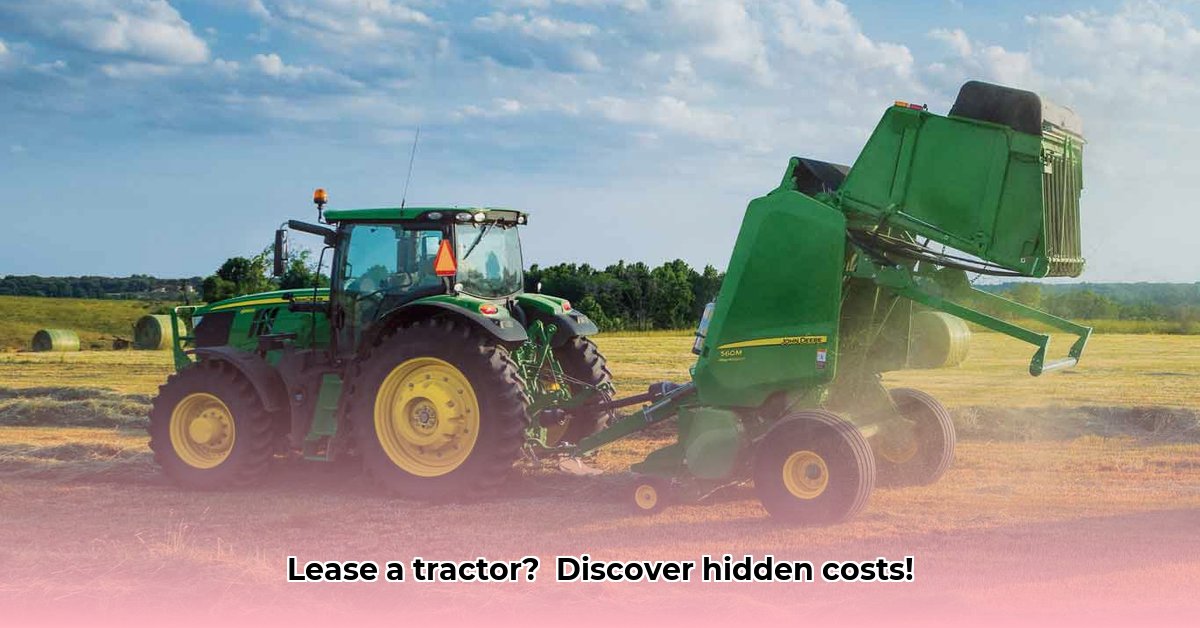
Choosing the right financing method for your farm equipment is a crucial decision impacting both your profitability and your farm's long-term sustainability. This guide helps you understand tractor lease costs and navigate the complexities of leasing versus loaning, ensuring you make the best choice for your operation. Whether you’re a small family farm or a larger operation, we’ll equip you with the knowledge to make smart, sustainable decisions. For a quick calculation, try our tractor financing calculator.
Understanding Tractor Lease Costs: Beyond the Monthly Payment
A tractor lease is more than just the monthly payment. Several components contribute to the overall cost. These need careful consideration to avoid unexpected financial burdens.
- Monthly Lease Payments: This is the core cost, representing the regular payment you make to the leasing company.
- Insurance: Protecting your investment against theft, damage, or unforeseen events is crucial. Determine whether insurance is included or if you need to secure it separately.
- Maintenance: The lease agreement may cover routine maintenance, or you may be responsible for these costs. Clarify this upfront.
- Potential Penalties: Late payments, early termination, or exceeding usage limits can result in penalties. Review the terms meticulously.
Factors Influencing Tractor Lease Costs: Tailoring Your Choice
Several factors significantly impact your tractor lease costs. Understanding these variables allows for a more informed and cost-effective decision.
- Tractor Size and Horsepower: Larger, more powerful tractors command higher lease rates.
- Age and Condition: Newer tractors with advanced technology typically have higher lease payments than older models.
- Technology Level: Advanced features like GPS guidance or precision farming technologies increase lease costs.
- Lease Term: Longer lease terms generally result in lower monthly payments but a higher overall cost over time.
- Market Conditions: Fluctuations in equipment demand and interest rates influence lease rates.
Do you know how much these factors can impact your overall cost? A recent study showed that leasing a newer, technologically advanced tractor could increase monthly payments by 25-35%, compared to leasing an older model.
Leasing vs. Loaning: A Detailed Comparison for Sustainable Farming
This critical decision significantly impacts your farm's financial future. Let's analyze the key distinctions:
| Feature | Leasing | Loaning |
|---|---|---|
| Upfront Cost | Low | High |
| Monthly Payments | Lower (initially) | Higher (potentially) |
| Ownership | No | Yes |
| Flexibility | High (easier to upgrade) | Low (requires long-term commitment) |
| Maintenance | Varies; often partly included | Farmer's responsibility |
| Tax Implications | Lease payments are generally tax-deductible; consult a tax professional | Depreciation and interest are tax-deductible; consult a tax professional |
"The choice between leasing and loaning hinges on your farm's specific financial situation and long-term goals," says Dr. Emily Carter, Agricultural Economist at Purdue University. "A thorough cost-benefit analysis considering interest rates, equipment lifespan, and maintenance is vital."
A Step-by-Step Guide to Choosing the Right Financing
This structured approach helps you navigate the decision-making process:
Assess Your Needs: What tractor size and capabilities best suit your current and future farming activities? Overestimating your needs can lead to unnecessary expenses.
Budgeting: Honestly assess your current financial health, including cash flow and existing debts. Can you comfortably manage anticipated monthly payments?
Shop Around: Obtain multiple quotes from various lenders and equipment dealers, comparing lease and loan terms. Compare not just monthly payments, but total costs over the lease or loan term.
Long-Term Vision: Align your financing choice with your farm's sustainability goals. Consider future equipment upgrades or technological advancements.
Informed Decision: Weigh all factors carefully before making your final choice. This is a significant financial commitment, demanding careful consideration.
Case Study: The Small-Scale Organic Farm
A small-scale organic farm with limited capital might find leasing advantageous. Lower upfront costs allow access to advanced equipment without a significant financial strain, thereby enhancing efficiency and possibly leading to increased productivity.
Conclusion: Sustainable Practices and Your Financial Decisions
Sustainable agriculture necessitates a careful balance between financial responsibility and environmental stewardship. Understanding tractor finance options empowers you to make choices that align with your farm's long-term viability. Remember to consult with financial and tax professionals for personalized guidance.
Resources
- Purdue University Extension – Agricultural Economics (Example - replace with actual relevant links)
- USDA Farm Service Agency (Example - replace with actual relevant links)